A signature flower

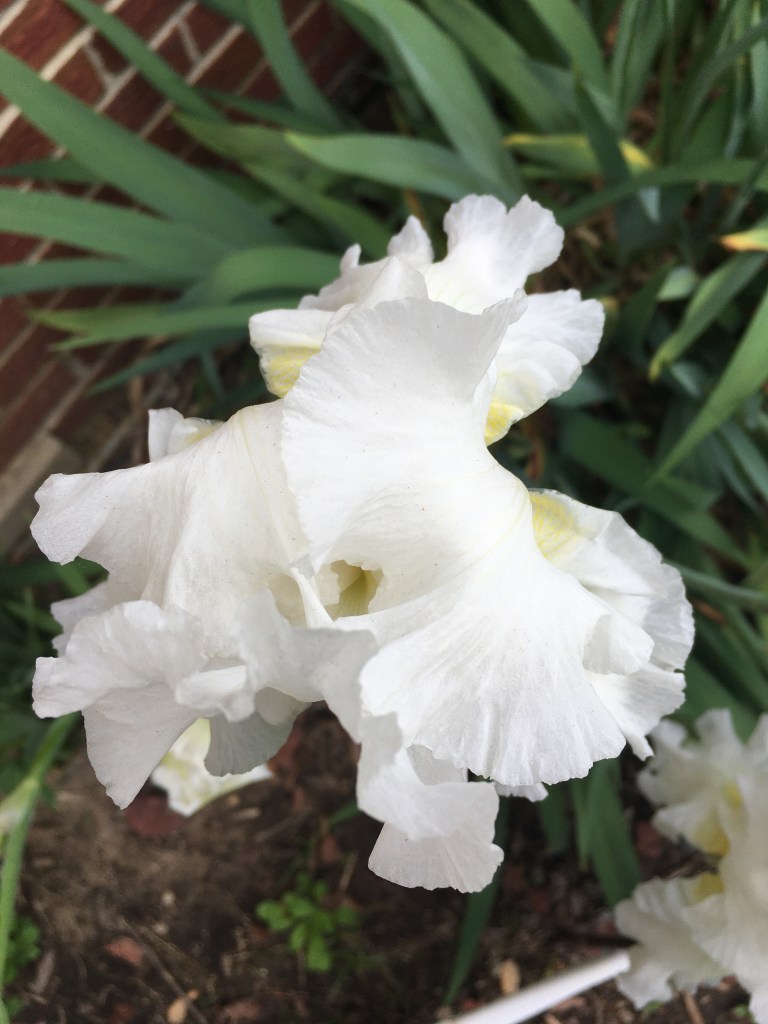
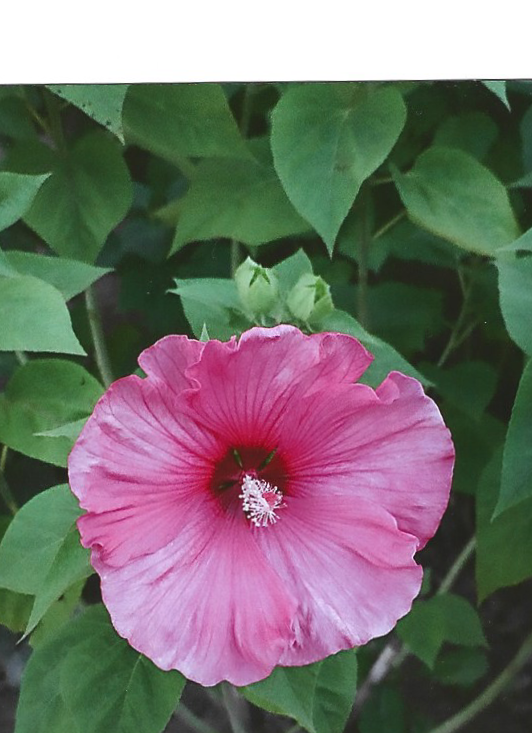
.We determined what our signature flower would be which identified us as a producer for the Habitat For Humanity Nursery. That nursery was established at my mentors’ facility. Our contribution, a perennial Hybrid Hibiscus. This plant would grow every year in our Northern climate. and would not have to be replanted. We had been growing them at our facility for over a three year experimental period. We learned much in the process and were able to decorate the level 1 and level 2 yards with them. They became the focal point of our landscape and donations. My mentor was happy to receive them for their nursery and he felt they were great landscape plants for Habitat For Humanity homes. My students were happy to grow them not always knowing what color they would be once propagated. I informed them that GOD was the artist and He would determine the colors. They smiled at that and quizzed me on my faith. I informed them that by His grace go I. The bad decisions I was making on a regular basis as a wild teenager could of landed me here. I was fortunate not to get caught. They laughed. I informed them that picking colors wasn’t all that He can do. They should try Him sometime. They may be surprised.

.The man we were growing these flowers for is a big proponent of His compassion, and understanding. I actually got to see our ex president Jimmy Carter and his wife Rosalynn walk down 25th street and Martin Luther King boulevard passing out bibles to the new Habitat for Humanity home buyers. I was invited by my mentor to participate in the “Blitz Build.” We were coordinating the landscaping. The prison Horticulture programs had grown trees, bushes, and perennials which were purchased by the home owners. We coordinated their delivery and planting. It was a major undertaking as 35 homes were constructed in a two week period hence the term, “Blitz Build” was most appropriate. I has a great experience there. The vacant lot we were staging the landscaping in had a number of mature mulberry trees that were full of fruit. When the neighborhood children found out that they could be eaten, I had stiff competition to see who could pick and eat the most mulberries. It wasn’t fair as they climbed the trees and picked handfuls of mulberries tossing them to their waiting friends. Better than candy.

.The secret service was always present at this build. You could tell because they wore headsets and they made sure the area was safe before our former president and wife entered it. He was genuine as was his wife. They shook all our hands, thanked us for volunteering and wanted to know what we thought of this “Blitz Build.” I found them to be the real deal and he blessed us for helping upon leaving. The noon bell went off and we were ushered to a large tented area were dignitaries from all walks of life ate with the likes of me and my peasant friends a most discernable lunch menu consisting of hotdogs, potato chips and pop. Listening to the laughter, and conversation made me aware that this was both a spiritual and uplifting experience for the participants. I was glad for the invitation to share in this unique camaraderie. After lunch we finished delivering our plants to the individual houses for planting. It made me feel good knowing the Prison Build and Horticulture Programs were being represented here as well as all of our students efforts in the final product, a well built home fully landscaped. I took pictures to share with them when I returned to my classroom. To Be Continued…. <Matthew 6: 25-34>


The First Harvest

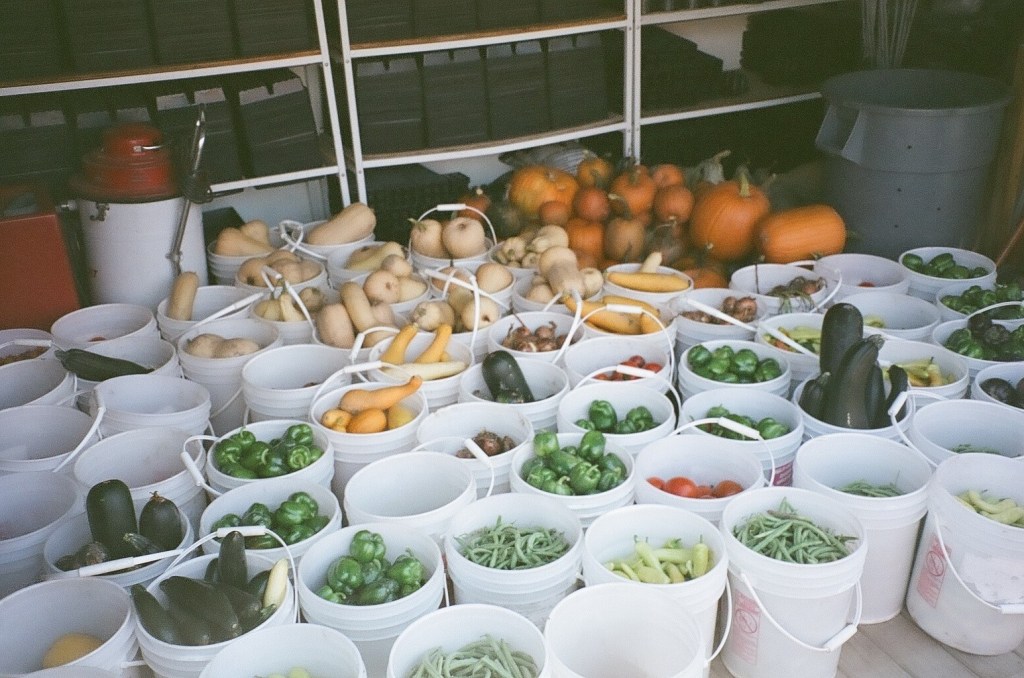
.The flowers for the yard had been grown in the greenhouse by my students and tutors. The production in the first year was incredible. Over 40,000 annuals, 20, 000 perennials and 10, 000 vegetable plants had been propagated and planted through out our facility. Donations were made of perennials and vegetable plants to our extension service, senior centers , and an area county hospital. The production looked promising even though we had been given a new name by our naysayers. “Camp candy land” was the unofficial name of our facility given to us by those who thought our program made this place “soft.” The Warden was happy as letters of thanks came to his office from our immediate community thanking him for all of our donations both plants and vegetables. I explained to him that it was the cooperation of the Resident Unit Managers, Assistant Resident Unit Managers, and officers who helped make sure my students were allowed to work where they were needed. They went out of their way to man the sally port so I could deliver all the donations. I felt this was really a team effort and there is no” I” in team. He needed to congratulate them as well. I was told he did thank all of them for supporting this program.

.When it became time to harvest the vegetable garden I was surprised to see about 10 prisoners who belonged to an outside group who supported urban Horticulture wanting a cut from the garden. They each had large duffle bags but were preempted from entering the garden by signs that read off limits. They immediately found me in the Greenhouse and wanted to know whether or not they could enter the garden and help with the harvest. “Help with harvest how?” I responded pointing at their luggage. I unfortunately had to inform them that they were not authorized to be in the garden or this Greenhouse. Only those with written details, my students and tutors, were allowed. I thanked them for offering to help, (though showing up with your personal duffel bags to “help harvest the garden”… ) but given the circumstances their request seemed disingenuous. They were not happy with my evaluation of their request to help. I even suggested that they take the class if they could meet the requirements.

.The Vocational School required applying students to have a GED or high school diploma. Students applying needed to be ticket free for the past year and stay ticket free during their enrollment. It was an incentive that worked in the beginning when it was being enforced. However, this would not be the case in future Education Administrations. The incentives to attend school would be diluted as well as the requirements for entry by Administrators who seemed to be directionless. This was not the case in the first years of harvest. The prison horticulture program donated garden produce to our local food banks, flowers to our area senior living facilities, house plants to our county hospital, and plants to our the Horticulture extension office. We got a lot of support from our Housing Unit managers and custody staff. Without that help the program would not be successful. We still had naysayers, but those supporting us outnumbered those who did not. Much like life, time changes everything. Need less to say, we would be eventually out numbered by naysayers. I never gave up hope as the social good we were producing through our work was always the reward. My students were focused and driven and I would not give up on them. They were what needed to be changed, and it was happening in a positive way. Law abiding citizens when they returned to society was always the goal. To Be Continued…

Cowboys come and cowboys go not caring how the flowers grow.

Then it happened. The siren was blown. My tutors and I scrambled all over the yard collecting tools from my students and locking them in our tool shed. I thought I had all my bases covered. Staff were accounted for in the school, and I was allowed to go count the tools to make sure I had them all. Once that determination was made, and the prisoners were back in their housing units for count we had a program and school staff meeting with our new Assistant Deputy Warden, our Deputy Warden and Captain. As always with new staff I would be asked a thousand questions on why , what and where my students were working, and with this new ADW it took on a much different dimension.

All horticulture projects being completed in the level 2 yards and school yards were stopped. I had to have permission through this new ADW’s office to complete or continue working on the gardens both flower and vegetable. Plans on how I wished to continue had to be submitted and approved by the new ADW’s office. Even after informing all of them that the main plan was approved by our warden the new ADW (in cohorts with our Deputy Warden, and Captain) insisted I needed to resubmit my plans for their approval. I can honestly say their request had me flummoxed. Another level of bureaucracy was being immediately established and imposed on the school to purposely halt our progress.

I knew from here on out I was going to have a hard time with these DOC administrators overseeing the school. It became even more complicated when some of our naysayers became even more indignant, and vocal. For the first time at this facility I was being targeted by some real staff assholes who would grab their crotch and state for all to hear, “hey Horticulture Teacher, I got your tulips right here.!” I couldn’t wait for our school principal to return to our facility. He had to divide his time between two facilities, and he wasn’t present for our new ADW’s introduction to our school. When he returned he wasn’t concerned by what I informed had happened at our staff meeting. He called the Warden’s office and we had an immediate meeting with the New Assistant Deputy Warden, Deputy Warden, the Warden, and the captain.

The Warden informed everyone at this meeting that the program I was implementing was already approved by the Governors’ office. He had the blue print that I had submitted earlier and informed them he had already approved it before sending it on. He thought it was rather ambitious of me but he could see I was already making great progress, and that I was not to be hindered in that endeavor. He informed me that if I was being harassed on any level I was to inform his office. The new Assistant Deputy Warden, the Deputy Warden, and Captain looked at me but unfortunately didn’t return my smile. The principal thanked everyone for their time and understanding. He had a way of doing it with his eyes closed that either spoke of his experience or his boredom. I believed it was both. He informed everyone if their weren’t any questions for the school we were needing to get back, because my students will be planting “Elephant Head Amaranth.”

All the plants had been grown in our greenhouse and were being planted in the flower beds facing the Administration Building windows. (where the Captain and Deputy Warden’s offices were located.) There were no questions, the meeting was adjourned, and we proceeded on our way. However, once the flowers started maturing after being planted I was being questioned on their appearance. I couldn’t help it if they were being perceived by some to be giving “the finger.” My explanation fell on deaf ears. What they called “the finger” was actually the trunk and after time would curl around the head giving it an appearance of an elephant’s head. I was not being believed by my naysayers. They considered this an act of defiance. “But by whom” I would ask? “Me?” They actually believed I had planned this. Give it time I would explain, “everything changes with time.” To Be Continued…

Horticulture 101

Pushback was beginning to happen again, and it had to do with who I hired as school tutors. It seemed that every time a new assistant deputy warden was hired (ADW) I had to explain who I was, what was I doing, and who was working for me. Specifically, who were my tutors, what were they being paid, how did I select them? I wasn’t well liked when I informed them to read DOC policy because that’s what I use to manage my work load with inmates. As far as my students were concerned they could speak with my school principal because frankly, not wanting to show any disrespect, “you are not in my chain of command. However, the principal would be more than willing to enlighten them.” I got some really weird looks after that. Needless to say, I would find myself using this logic: “I don’t report to you please call my school principal. I am doing what is expected of a teacher running a Horticulture class. Please don’t continue to interrupt my class, thank you.”

From that point on I would draw the ire of some of the most vocal critics this side of the Mississippi River. Fortunately, God had blessed me with a continued hearing loss, (which I didn’t find out about until I had my first executive physical in my late 20’s. Seems an early life ear infection had taken some of my hearing and I did not hear what the Doctor described as the female decibel level. When I think about all the times I heard my poor mother say” boy are you deaf?” I could at least have answered, “yes I am!” ) and if my detractors didn’t have bass in their voices I didn’t hear them. If they did have bass in their voices I ignored them. A blessing still. However, that didn’t stop the constant barrage of memorandums I would have to respond to in the early phases of the program. We didn’t have email yet and the DOC practiced “memo management.” Decrees would be issued by the “memocrats” and I was constantly being pulled to the wardens’ office to explain my noncompliance. “Didn’t you read the memo?!” became the mantra of the memocrats, and to that question I would always respond, ” what memo?”

It seemed prisoner movement, specifically my students and tutors, became a bone of contention for the memocrats. They would cite various DOC policies and facility procedures that they claimed I was in violation of by running this program. The memocrats’ movement brought out many detractors who believed that prisoners just needed to be locked down and the DOC school should be shut down. Our school principal was a strong voice for the school and he would say on many occasions that we are outnumbered. The last thing we need is more prisoner idleness. I could also find policy directives that backed what I was trying to accomplish with horticulture, and used them to disarm the naysayers. However, the pressure and stress would eventually work on my innards. Something I didn’t even realize was happening until later in life.

It became a game for me in the beginning stages of implementation. I would have to have written details for my tutors to maintain the greenhouse even in my absence. The warden and school principal understood this and made sure I wasn’t hindered in securing those details. I received help by the warden assigning the school officer to also check on me, the greenhouse , and gardens on a regular basis. The yard officers also helped supervise the projects in the level two yard, and I appreciated that. The officers let me know they were happy to help when they could. For me it was a challenge of logistics. Who was working were, with what tool, and what was being accomplished, all had to be tracked. My students were making flower beds and garden beds through out the level two and school yards. I had to have a plan on how I would secure the tools if an emergency arose. Fights in the big yard, school, housing units, that could escalate into large confrontations were always a possibility, as well as assaults’ on staff by prisoners. When the siren was blown the prisoners were instructed to return to their housing units immediately for count.

TO BE CONTINUED…

The First Plan Revisited

“ A man who carries a cat by the tail learns something he can learn in no other way “

Mark Twain

I figured out rather quickly that for every action I completed towards implementing the Horticulture class at the prison I could expect an equal and opposite reaction from my detractors. It is the social physics phenomena known as “push back,” and it occurred as regularly as I had class projects completed. The greenhouse was completed and I began filling it with houseplants. I instructed my classroom tutors to begin making a blue print of the walkways where we would begin making the flower laboratories, the herb gardens, and the vegetable gardens. I wanted them to include only the structures that would be included inside our facility like the housing units, chow hall, and greenhouse. All would have their own forms of garden laboratories in the level two prison yards. The view would be top down and drawn to scale on a regular 3′ x 5′ blue print sheet. That sheet would later be transcribed to a much larger parchment 10′ x 10′ drawn to scale and composed of 8″ x 11″ sheets of paper taped together. I used that blue print to decide what would be planted where throughout my tenure with the prison.

Our maintenance department was instrumental in our program. Without their help we could not have accomplished all that we did. They installed the large blue print on the wall in my classroom, and we used it for a reference point for instructing our students. We decided to grow mostly annuals so that the landscape floriculture would change every year. The warden was shown the original 3′ X 5′ blueprint and asked if he could keep it. He thought it was an ambitious plan and he would use it as a guide to see what we actually implemented each year. One big concern of his was how much we could grow in our vegetable gardens, how much could be used in our chow hall and how much could be donated to our immediate community. On paper and in theory this undertaking would benefit the prison staff, the prison population, and our immediate community. Making it work that way was not always that easy. I would tell my students on a regular basis, “there is gardening and then there is prison gardening. A totally unique experience.”

Prison gardening included keeping track of every student on the level 2 yard working to complete the flower and vegetable garden projects. My students were issued garden rakes, shovels. and hand shovels to plant with by me. My tutors would record who took what tool. It was their job to make sure the tool was returned. If it wasn’t returned it was my job to find it. I can honestly say that in my 25 year career in prison education I rarely had to retrieve a tool. Many tools were broken from use and had to be replaced, but not one was lost. The ramifications for a student losing a tool resulted in their immediate lock up in segregation. I would remind my students daily that a tool lost by them would result in their performance of the “backward ballot.” Them walking backwards with their hands handcuffed as the officers escorted them to segregation, and removal from the assignment. They didn’t want that and honestly neither did I. I also emphasized that this programs’ success depended on their performance, and accountability. A tool lost could be used as a weapon. They seemed cognizant of that, and wanted the program to be successful. My students seemed dedicated. Many would be paroling in the near future, and they wanted good reports in their school files while they participated in this program. To be continued….

The First Plan

Developing a workable horticulture plan for the prison school was much easier than implementing it. I started by hiring Horticulture tutors who had a background in the discipline. I also had to include all the workers who were hired by one of the Deputy Wardens, and they proved to be a real pain. They thought they were better than everyone else because they had been hand picked by the Deputy Warden to work on the prison grounds. When I informed them that they had to report to me in the school at 7:00am Monday through Friday I knew they would test me. I fired 3 of them for not reporting on their assignment within the first week. They complained to the warden who informed them they were technically “out of place” for not being on their assignment and had nothing coming. The other workers showed up on time every day from that point on and followed my instructions. They knew I wasn’t going to tolerate nonsense and the chaos they create playing Machiavellian games.

However, the three inmate workers I fired grieved me for “protocol malfeasance!'” The fact that I had to appear before a grievance committee made up of one prisoner advocate, one DOC advocate, one prison school advocate, and the Warden himself lead me to believe I could be in hot water for firing some straight up assholes. This was uncharted water for me, and the lines of responsibility got awful blurry. I actually felt that when this grievance was resolved I would be the one looking like the asshole. Sure enough, our school principal came to me later in the day after my testimony and said I would basically have to hire them back. I thought WTF is this? He informed me that as the work assignment supervisor I had to show a progression of trying to correct their behavior through written evaluations known as 363’s. I laughed. I informed him they were found guilty of the tickets I had written for being out of place. (not on their assignment a major misconduct) DOC policy states they were to be removed from their assignment if found guilty.

My principal didn’t know I had written them major out of place tickets. I didn’t inform him of it, or the grievance committee. The Classification Director upon seeing the hearing investigators docket and their guilty verdicts had pulled their details for my assignment. When I informed him of this fact he smiled. He knew from that point on they could not report for the assignment without a detail. Being found guilty of a major misconduct on an assignment they didn’t report to had even broader consequences. They were taken off the assignment, had a week of top lock, and could not apply for any other work assignments for at least six months. The principal knew this as well. Smiling he informed me that he could see I knew this bureaucracy better than most.

Working as a management change agent had taught me some valuable lessons about people. Everyone seems to have and angle when it comes to accountability. They usually hold themselves in high esteem and unaccountable because in their mind’s eye they do no wrong. However, everyone else is to be held to a much higher standard of accountability and punished accordingly when those standards are not met. I found this to be the underlying premise of the prison bureaucracy philosophy. The principal thought I had pulled a fast one. I informed him that I only followed DOC policy which gets awfully blurry when there are many layers of bureaucracy pushing their own narratives on how I should manage my classroom. I had heard it many times and through out my career, “Who does he think he is?” My reply was always the same, “I am just a peasant working as a prison teacher trying to develop this prisons’ horticulture plan. That is who I am to day. In this environment it could be changed tomorrow!” To be continued…..

The Plan

Exodus 3: 1-10

.When I returned to our prison school the principal was waiting for me. He had already spoken with the principal whose facility I had visited. I was tired from the ride back and we agreed to talk about my trip in the morning. He asked what I thought about prison horticulture and I informed him if he gave me “card blanche” I could make this place look like the land of “OZ!.” He laughed and said we have to impact our community. I laughed also and said I have a plan for that as well. My past experience working in two large urban university teaching hospitals taught me to have a plan a, b, c, d, e,… what ever it took to get the goal implemented. I thought I would have no problem doing this here and making this place look like “OZ” was going to be part of the plan no matter how many times I revised it.

.The next morning my meeting with our school principal ended with a meeting in our warden’s office. He informed us that all the approvals needed to begin building the greenhouse had come through and our maintenance department would begin construction immediately. My job was to oversee the construction and hire horticulture tutors who preferably had a degree in agriculture/horticulture or experience in either. That was easier said than done as I would find out. The curriculum would come from my mentoring facilities program and would include books, videos, cd’s, and a plotter which was used to monitor completion of classroom and field work experience we called OJT. (On the job training). The OJT would include the hours worked in the greenhouse, landscaping, and gardens. I set the gardens up to include community and student plots. The student plots were set up for 3 students in one plot which made for an interesting dynamic. A Horticulture completion would include all book work, labs, and a minimum of 200 hours of OJT spread out between the greenhouse, gardens, and landscape.

.In the beginning years 1995-2003 I was still responsible for teaching level 4 and level 2 custodial maintenance six months of the year-October 1 through April 1. When I completed the custodial maintenance students I moved on to teaching horticulture. This was not always easy to do and I found my self overlapping subject times. Custody officers and deputies were quick to question what I was doing (its their job) and I found myself pressured often to complete one subject matter entirely before moving on to the next. The prison was not an easy environment to complete teaching goals. Stabbings, beatings, leading to assault and murder charges from the state were regular occurrence in this environment. When assaults happened the prison would be locked down. The school would be closed. The teachers were usually assigned to housing units and had to report to custody supervisors. The principals were to report to a “think tank” in the warden’s conference room. I found the think tanks usually included the “friends of the warden’s” all others were to work together and complete what ever task custody supervisors had assigned. The lock downs did not keep me from putting together a horticulture plan. I continued to work on what I thought I could accomplish here in the “Land of Oz.” To be continued ..

The Visit Part 3

While walking out of seven block back through the administration building my colleague began talking about the prison farms and how the prison was very much self sufficient at one time. The farms produced beef, dairy, chickens, eggs, and pigs. They fed the inmates and prison staff with which could only be described in current terms as farm to table. I had heard stories about the farms and how large they were. I had heard the inmates were trained as meat cutters, cooks, bakers and in animal husbandry. My colleague confirmed that history. He also informed me that they did not have to buy anything from outside of the prison system. If they couldn’t make it or grow it, they didn’t need it. They also had factories to make furniture, clothes, shoes, and license plates. The furniture was used in state offices, prisoner cells, and prison offices. I actually had a chair and a desk that I used in my classroom for the 25 years I taught in corrections. That is either a testimony to how well the furniture was built or the fact that I didn’t sit much.

We proceeded to another part of the prison they called trustee-level one. It was there that the greenhouses were being operated. It was explained to me that only trustee-level one prisoners were allowed to run them. That designation meant that they were going to be going home soon , could be trusted to complete their tasks with intermittent supervision., and not try to escape. Although the later is what ended the prison farm program. Expecting a prisoner no matter how close to going home not to escape was unrealistic when presented the chance on a daily basis to do just that. When two escapees from the trustee-level one had escaped in the 1980s they killed a farmer and his wife. That incident and a number of other concerns from the immediate community would leave the prison administration an easy avenue for deciding to abolish the farms and make education of prisoners a higher priority. A good description of what they actually accomplished at the farms is depicted in the following article:

https://www.mlive.com/news/jackson/2014/06/peek_through_time_from_lush_ga.html

The greenhouses were of various construction. The newer ones had the standard visqueen and aluminum framing. The older ones actually had brick, cinder block and glass. All had furnaces, some fueled with wood burning stoves to help keep the costs of heating down in the winter. All the greenhouses were packed with plants. I was given 30 house plants to take back to my facility. Not having a greenhouse yet I would keep them in my classroom. My colleague informed me that they had a nursery where perennial plants grown at the other prison horticulture programs were kept and maintained. They would eventually end up in the landscape of Habitat For Humanity Homes. He informed me that I was welcome to grow plants for the Habitat Homes as well once we have a greenhouse. He also informed me that some of the prison horticulture programs were growing trees for the Department of Natural Resources He would walk me through the process once we got started if I chose to grow for these projects. He said it would even be better if I could find a signature plant (something really unique) which would identify our facility program as the grower. After seeing everything at this prison, it had been a long day and I had a long drive back. We exchanged our farewells and I was invited back when ever I wanted to see what was being accomplished there. He seemed enthusiastic that I would be helping their effort and gave me his contact information. With a department van loaded with house plants I headed back. My trip home went quick as I was truly inspired and could not wait to tell the warden what I thought we could accomplish at our facility. To be continued…..

The Visit Part 2

Acts 20:34-35

As we began walking back to the school the principal started to explain what was currently happening at this prison. In 1988 the prison was ordered to downsize by the Federal Government. Being the “largest walled prison at that time,” it was not an easy task. The main prison was divided into 4 separate prisons. More prisons were built as well through out the state to help with the overcrowding identified as one of the main factors of the 1981 riots at this prison. Prisoner porters were washing the sidewalk and with a broom swept the water off the sidewalk as we walked towards the prison school. The principal felt they were cleaning the remnants of blood left on the sidewalk from the assault on the officer early this morning. The school had not opened yet and there looked to be about 500 prisoners mulling around the school yard. I felt like I was on a pirate ship.

We stopped walking and the principal informed me that in about 30 seconds the big yard would open. When that happens, those going to school will enter the building and those going to the yard would proceed there. The school opened and it seemed that for every four prisoners that went to the yard, one went to school. The principal informed us that he would ask the teachers to submit their absences to the school officer as he believed that many of those prisoners going to the yard should be in school. He saw familiar faces. If they were proven to be truant from school they would lose their yard privilege. Through out my career I found this to be an on going battle for the academic school.

The school opened and the principal began introducing me to the teachers. I thought he was very gregarious. I could tell the teachers liked him and he made everyone feel at ease when he spoke with them. He informed them of where I had traveled from. The new prison built on the east side of the state and what he had planned to show me on the tour this morning. He let them know if he was needed they could have him paged overhead. The school itself was old but clean and the teachers were more than willing to give me a few pointers on teaching inmates. There is “school” in the world and then there is “prison school!” The prison school could get violent at times with prisoners assaulting each other or staff. Unfortunately, the prison school assaults seem mild when compared to the blood baths happening in our schools currently. I never had to worry about a traumatized student coming back to shoot everything and everybody who got in their way. That just didn’t happen in prison. So I thought. My experience taught me later that any thing could happen in prison and usually did when you least expected it.

We finished the tour of the school. The teachers wished me well in my new career and we proceeded to 7 block. Entering 7 block we all had to sign in. The principal led me to an observation point where you could see five floors of barred cells and long isle ways he called the galleys. He informed me that they had to install awnings over the galleys because inmates would throw objects at the officers and at other inmates. Later back at my facility I was informed by our afternoon school officer that one of his relations who worked this block had his ear severed off by a mop wringer dropped from the galley above. “He thinks someone was trying to kill him.” I really thought that should have been understood. I was shown the chow hall and the gun turrets with what appeared to be bullet holes in the metal on the walls. One of the chow officers informed me that when a fight broke out in the chow hall an officer would fire a round out of the turret and the sound of the ricochet would put the inmates on the floor. At that point no-one moved for fear of being shot. The officers would then remove the fighters from the chow hall and place them in segregation. The gun turrets made the chow hall manageable when the inmates decided to be assholes. Our next tour would take me to another part of the prison where greenhouses were built many years ago, and much good came from the Horticulture program’s gardens. To be continued…..

The Visit Part I

It was a long drive, but by leaving early in the morning I beat the traffic. I just hoped the ride home would be as quick Pulling up in the old prison main parking lot looking at the front doors of what could have been a castle was the original prison built in 1839. Between the steely skies and the buildings’ dark brick stone exterior I felt I had arrived at the home of Dr. Frankenstein. First impressions are lasting impressions. Again, I ask myself,” what the f…are you trying to accomplish?” All this place needs is a moat and a fire breathing dragon. I shake my head and enter the prison through the main doors. The terrazzo floors are polished I noticed when entering what appears to be a rotunda. It looks like a union station without the train tracks. An officer calls me over to the main counter that resembles a hotel check-in. The song “Hotel California” comes to mind by the Eagles, “you can always check in but you can never leave.” I laugh to myself as the officer at the desk asked me to produce my identification. When I produce my identification he asked me to sign in the book on the counter. I am a little hesitant at first. I asked, “when I leave (reassuring myself) I will also be signing out?” He instructs me to sign in under the visitors column and to remember my number next to my name so I can sign back out when I leave. Good, I felt better knowing he was expecting me to leave at some point in time.

When I finished signing in, the front desk officer pointed me in the direction of an elderly gentleman, and yells out to him, “here’s the guy you’ve been waiting for.” He greets me with a smile, introduces himself, then informs me that the school principal of this prison wants to meet me and take me on a tour. At first I thought, wow, what hospitality, a tour? Then I thought, hell this is a big prison…I could be touring all day and not get accomplished what the warden wanted me to do here. I asked the Instructor if he would be joining us and he said he would. Plus, he felt we could then talk about what the other Horticulture programs are doing in the state and what they are trying to accomplish in the prisons. It felt good to know he would be my contact and mentor. I would have several mentors in my 25 year career with the Department of Corrections. He seemed very knowledgeable and over the years I was not disappointed speaking with him.

We were directed to the gate entrance were we produced our badges and were told to enter. The principal introduced me to the officer manning the gate entrance, and then informed me to empty my pockets once inside the gate. As we were being searched the officer informed the school principal that a custody employee was stabbed on the walk to the school last night and we should stay together They would keep a visual on us as we walked to the school. I didn’t say anything. Once searched we were directed to exit the gate. As we left the administration building and walked out on the walk way to the school the principal asked my mentor if he had “heard of anything on the condition of the officer stabbed?” He shook his head and we proceeded to the school. I wasn’t feeling confident anymore. I knew from past experience, (so little I had with the DOC) that serious incidents were handled with locking a facility down. I felt that this was a bad day to visit. I could be stuck here indefinitely. If they blew the siren for emergency count we would have to man the school. We would not be able to leave the school until directed by custody. Especially if they were looking for weapons. Unfortunately, as I was told by my new mentor, in this case they didn’t have to search for weapons. It was left inside the body of the officer they tried to kill. Custody administration would be reviewing any and all camera videos, even though the cameras were very limited at this time in the DOC. I felt very bad for the officer. Most of the shanks were hidden in the rectum of the assailants. I could only imagine the infection that would be created if that knife was stored there before the assault.

To Be Continued